


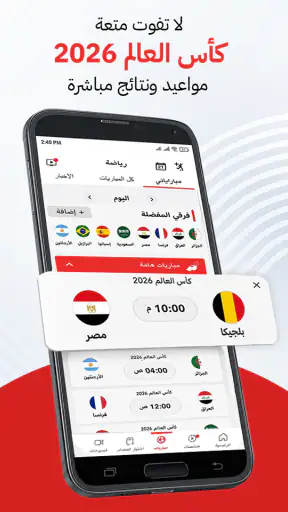
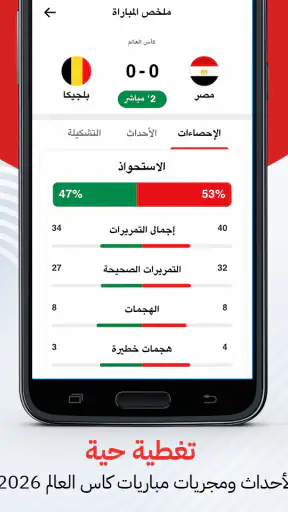
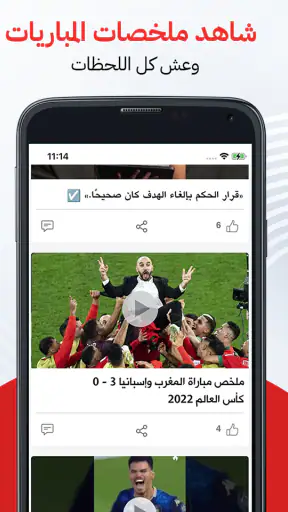

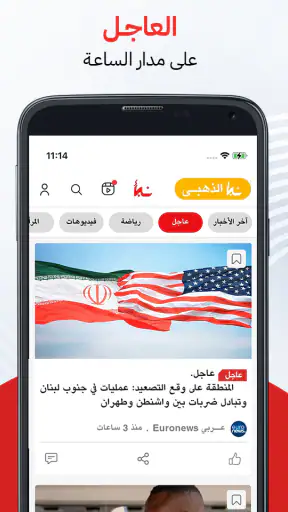
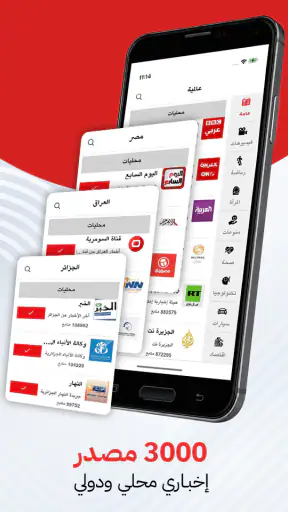
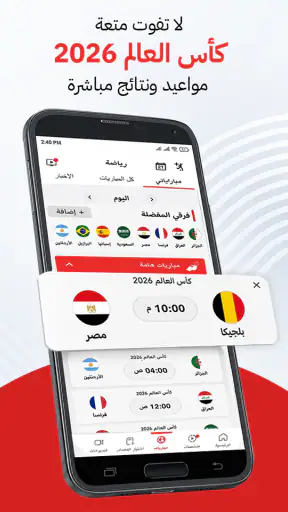
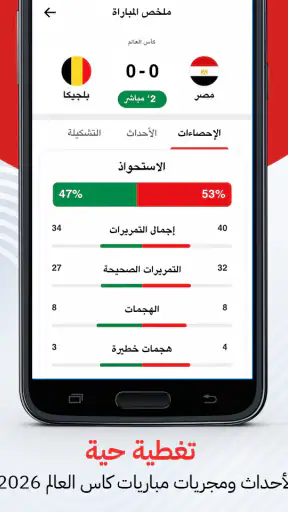
I tested نبأ : اخبار اليوم ومباريات as a practical news app for a shared household, and its appeal became clear quickly: it brings urgent news updates and match schedules into one place without asking the family to manage several separate apps. It belongs to the News & Magazines category, is free to install, and is suitable for Everyone. Madar Software has kept the idea focused on two daily habits—following important breaking stories and checking Arab and European football fixtures—rather than trying to become a complete social network or a full newspaper replacement.
That narrow focus is useful when different people in the same home want quick information for different reasons. One person may be checking the morning headlines, another may want to know when a match starts, and someone else may simply want an alert about a major developing story. I found the app most convincing in those short moments when opening a browser, searching several websites, and comparing schedules would feel like unnecessary work.
How it fits into a shared household
A realistic example is a family preparing for an evening together. One person sees a breaking-news notification during the day, while another is trying to work out whether an Arab or European match will overlap with dinner. Instead of passing around different links or asking someone to search again, the app gives both users a shared reference point. It does not turn the household into a coordinated calendar, but it can reduce the small amount of back-and-forth that usually happens around news and football.
I also found that its value depends on how each person uses a phone. For someone who wants a quick headline and a match schedule, a focused app is more convenient than a general browser. For someone who already has a carefully arranged collection of newspaper apps, sports services, and notification tools, نبأ may feel like an extra layer. The best fit is the household that wants a simple common source rather than a highly customized information system.
The app is especially approachable for relatives who prefer Arabic content and do not want to navigate a complicated international news service. Its short store description is simply “نبأ,” which matches the straightforward character of the product. I would not describe it as a deep reading platform. I see it more as a quick-access bulletin for the moments when speed and convenience matter more than long analysis.
That distinction is important in a shared home. A parent may open it for a fast update, a teenager may check a fixture, and another adult may use it as a starting point before reading a longer report elsewhere. The app works well in that first stage. It is less suitable when every member of the household expects a different editorial style, detailed background reporting, or extensive tools for saving and organizing articles.
What happens when several people use one device
On a tablet or a phone that is regularly passed between family members, the main benefit is immediacy. Nobody needs a complicated handover process just to check a headline or a fixture. The next person can open the app and look at the current information. That makes it practical in kitchens, living rooms, and shared spaces where the device is used casually rather than as a private personal dashboard.
There is also a trade-off. A shared device means that the same view may be seen by everyone, and any notification arriving at an inconvenient moment can be visible to whoever is holding the phone. I would therefore treat the app as a common information tool, not as a private news diary. If one family member follows sensitive subjects or simply prefers a quiet lock screen, the household should agree on how notifications are handled at the device level.
This is one of the less obvious points about using a news app in a family: convenience and privacy are connected. A shared installation can be efficient, but it also blurs personal preferences. Since I would not use a single shared setup to represent several people’s individual interests, I think the app is strongest when the household’s news needs overlap reasonably well.
Keeping the setup simple without confusing responsibilities
Getting started should be uncomplicated for an Android user whose phone runs at least Android 6.0. The app is currently at version 21.5, so it is not a brand-new experiment, and that matters when deciding whether it is appropriate for a device that is not running the newest software. I would still check the phone’s available storage and notification behavior before installing it on an older shared handset, because an aging device can make any news app feel less responsive than it should.
The most useful setup decision is not technical; it is deciding who the app is for. If the phone belongs to one person, that person can treat the news feed and match information as personal choices. If the phone belongs to the household, everyone should understand that the app is being used as a common window into current events. That small conversation prevents the usual confusion where one person assumes alerts are meant for them while another person keeps changing the device’s preferences.
I would also avoid installing it on every family phone automatically just because it is free. Free access lowers the barrier to trying it, but it does not mean every household member needs another source of alerts. A better approach is to place it on the device used for shared checking, then decide whether individual phones genuinely benefit from it. This keeps the information flow manageable and avoids turning every important story into a separate interruption.
The app includes in-app purchases priced from $4.49 to $18.00 per item. That does not change the fact that the app itself is free, but it is worth remembering on a device used by children or multiple family members. I would make sure the person responsible for the device understands that optional purchases can exist before handing it over for casual use. The practical rule is simple: use the free experience first, and only consider an optional purchase after deciding that it solves a real problem for the household.
Because the app is rated for Everyone, it is broadly accessible in an age-rating sense. I would not confuse that with a promise that every breaking-news topic will be emotionally comfortable for every child. News can involve conflict, disasters, crime, or other difficult subjects even when the app is suitable for a general audience. In a family setting, the adult’s judgment still matters more than the label alone.
Using it to coordinate news and match plans
The strongest household workflow I found is to use the app as a quick coordination point, not as the only source for every decision. Before making plans around a match, one person can check the schedule in the app and tell the others what to expect. Before discussing a developing story, someone can use the latest alert as a prompt to look for fuller context. This division of labor keeps the app useful without asking it to provide every detail.
Match schedules are particularly convenient for families with different football interests. The reference to Arab and European matches gives the app a wider reach than a service devoted to one competition or one country. If relatives support different clubs, a single schedule-focused destination can be easier than opening separate team pages. The trade-off is that a broad schedule may not offer the depth that a dedicated sports application provides, so serious followers may still prefer their specialist alternative for lineups, statistics, commentary, or detailed results.
For everyday planning, I would check the schedule earlier in the day rather than waiting until everyone is ready to watch. That gives the household time to resolve the common problems: a match starts during a meal, two games overlap, or someone has mistaken a competition’s local time. The app’s role here is modest but useful—it helps start the conversation before the last minute.
Breaking-news alerts serve a different purpose. They are valuable when a person wants to know that something important is happening without repeatedly refreshing a website. However, an alert is not the same as a complete explanation. My advice is to treat it as a signal: read the update, consider whether it affects the family, and then seek fuller reporting when the subject is important. This is a healthier habit than forwarding every notification immediately to a family group.
That workflow also reduces unnecessary alarm. In a shared home, one dramatic headline can quickly become a source of confusion if nobody checks the surrounding details. I prefer using the app to identify what deserves attention, then discussing the information calmly. It is a small but meaningful difference between being informed and being constantly interrupted.
Age, trust, and the limits of a general audience label
The Everyone rating makes the app approachable for households with mixed ages, but I would still introduce it differently to a child, a teenager, and an adult. A younger user may need help understanding that a breaking alert can be incomplete or developing. A teenager may be able to explore independently but still benefit from a reminder to compare important claims with established reporting. An adult can decide which stories deserve deeper reading and which can be ignored.
I appreciate that the app can serve as a common starting place without requiring every user to be a news expert. At the same time, trust should come from sensible reading habits rather than from the presence of an alert. I would not use any single app as the family’s final authority on a serious event. The app is better at telling me what has become worth checking than at replacing careful judgment.
There is a useful educational angle here. Parents can ask children to explain the difference between a headline, an alert, and a full report. They can also use a match schedule to teach practical checking habits: confirm the competition, check the teams, and make sure the start time fits the plan. These are simple skills, but they make a general news-and-sports app more valuable than passive scrolling.
Trust also includes knowing when not to share. If a notification concerns a worrying event, I would read it first before displaying it to younger family members. The app’s age rating does not remove the need for context. A household that treats alerts as conversation starters, rather than unquestionable conclusions, will get much more from the service.
Where it beats familiar alternatives—and where it does not
Compared with opening a mobile browser, نبأ is more convenient for repeated checking. A browser can reach almost anything, but it also brings search results, advertisements, unrelated pages, and the need to remember which sources are reliable. This app offers a more direct route to the kind of information its audience is likely to check every day. For a shared device, that simplicity is a genuine advantage.
Compared with a large international news application, it may feel less overwhelming. General news platforms often provide broad coverage, personalization, podcasts, opinion sections, video, and many layers of navigation. Those features can be valuable, but they can also make a quick household check unnecessarily slow. I prefer نبأ when the question is, “What important update should I know about?” rather than, “Which complete news ecosystem should I build?”
Dedicated sports apps remain better for users who care about more than schedules. If you need deep match analysis, extensive team information, or highly specialized competition coverage, a football-first service is likely the stronger choice. The advantage here is the combination: news alerts and Arab and European match schedules in one lightweight destination. That combination is convenient for ordinary use, even if it is not designed to replace every specialist tool.
Social media is another familiar alternative, but I would not use it in the same way. Social platforms can deliver updates quickly, yet they also mix personal posts, reactions, rumors, and repeated content. A focused news app is easier to approach with a specific purpose. I can check it without entering a stream designed to keep me scrolling. For a family device, that narrower purpose is often a healthier fit.
The limitation is that focus can feel restrictive. If your household wants personalized feeds for several languages, extensive archives, or a detailed reading experience, you may outgrow it. I would skip it for a reader who already has trusted specialist apps and dislikes having another alert source. I would also skip it for someone who expects a full sports data center rather than a convenient schedule reference.
What I would recommend before making it the household default
I would begin with one shared device and a short trial period. During that time, I would watch how often the household actually checks the app, whether the match schedule helps with planning, and whether alerts add useful awareness or simply create noise. This is more informative than installing it everywhere at once. A family can then decide whether the app belongs on personal phones, a living-room tablet, or only one person’s device.
I would also establish a simple rule for important stories: the person who sees an alert should summarize it carefully instead of forwarding the headline without context. That makes the app part of a reliable household routine. For matches, the rule can be even easier—check the schedule before making plans, then confirm the details again if the event is especially important.
Another practical tip is to separate shared convenience from personal reading. Use the app for common updates and football planning, but let family members choose their own deeper sources when they want analysis or a different perspective. This avoids arguments about a single app needing to satisfy every taste. It also respects the fact that a household may share a device without sharing the same interests.
From a cost perspective, the free entry point makes experimentation easy, while the optional in-app purchases deserve adult attention on a shared phone. I would not pay for anything immediately. First I would identify the exact benefit, discuss whether everyone agrees it is worthwhile, and check who controls purchases on the device. That approach keeps the app’s convenience from becoming an accidental household expense.
Finally, I would explain to younger users that “Everyone” describes the intended age suitability, not the emotional tone of every headline. A family can use the app together while still choosing which subjects to discuss and which ones require an adult explanation. That balance is more realistic than assuming an age label can manage the entire news experience.
My household verdict
After using it as a shared news-and-football tool, I see نبأ : اخبار اليوم ومباريات as a sensible choice for households that want fast Arabic-oriented updates and an accessible way to check Arab and European match schedules. Madar Software has kept the concept recognizable, and its 4.3 average from around 25 thousand ratings, along with more than a million installs, suggests that many users find the approach useful. The figures are encouraging, but my recommendation comes mainly from how well the app fits short, repeated household tasks.
I like it most when several people need the same basic information and nobody wants to maintain a collection of separate services. It can help a family notice an important story, plan around a match, and start a better-informed conversation. Its free status and Everyone rating make the first step easy, while support for Android 6.0 or later keeps it relevant to many older devices.
My reservations are equally clear. It is not the best choice for deep journalism, highly personalized news management, or serious football analysis. Shared-device users should think about notification visibility, purchase responsibility, and the difference between an alert and a complete report. Those are not reasons to reject the app; they are the boundaries that make its role clearer.
I would recommend it to a family that wants a simple common information point, not to a reader searching for an all-purpose media command center. Used with that expectation, it is a practical free app for quick updates and match planning. The household that keeps its alerts purposeful and treats its headlines as starting points will get the most value from it.


